



Are smooth white pebbles natural or artificial? This is a question that often arises among customers who are interested in using these beautiful stones for various purposes, whether it's for landscaping, interior decoration, or other creative projects. As a supplier of smooth white pebbles, I've encountered this query numerous times, and I'm excited to share my insights on this topic.
The Natural Formation of Smooth White Pebbles
Natural smooth white pebbles are the result of a long - term geological process. Over thousands or even millions of years, rocks are broken down by natural forces such as water, wind, and ice. Rivers play a significant role in this process. As rocks are carried by the flowing water, they collide with each other and the riverbed. These constant collisions gradually wear away the rough edges of the rocks, giving them a smooth and rounded shape.
The color of the pebbles is determined by their mineral composition. White pebbles often contain minerals such as quartz, calcite, or feldspar. Quartz, for example, is a common mineral that can appear white. When these minerals are present in high concentrations in a rock, the resulting pebble will have a white color.

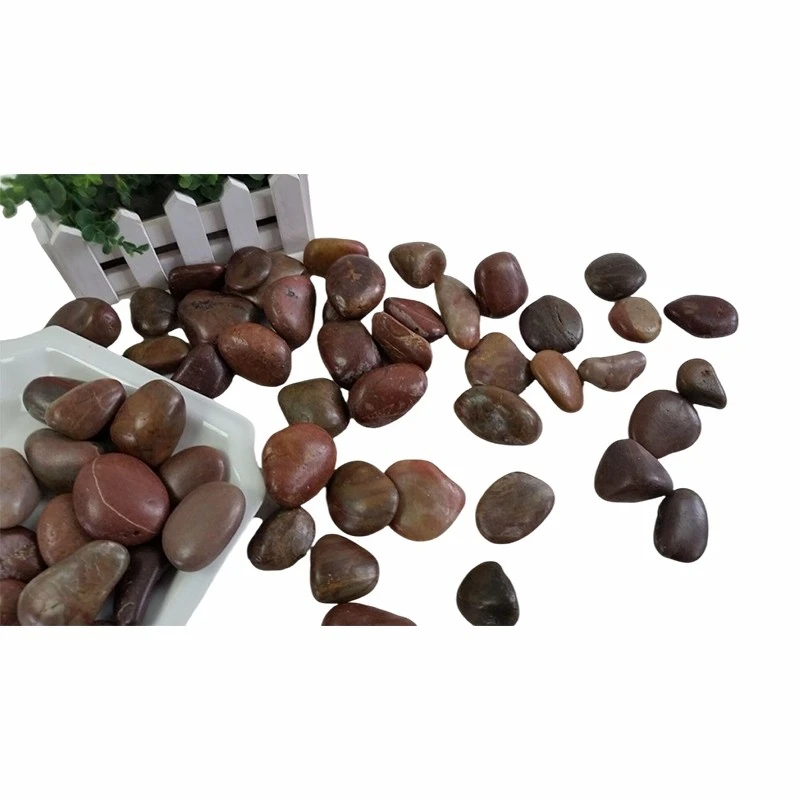
Some of the most well - known sources of natural smooth white pebbles are riverbeds, beaches, and glacial deposits. In riverbeds, the continuous flow of water acts as a natural polisher, creating smooth surfaces on the pebbles. Beaches are another great source, where the action of waves and tides further shapes and polishes the stones. Glacial deposits can also yield smooth white pebbles, as glaciers carry and grind rocks during their movement.
Artificial Production of Smooth White Pebbles
On the other hand, artificial smooth white pebbles are also available in the market. These are typically manufactured using various techniques. One common method is to start with a raw material, such as concrete or resin, and shape it into the form of a pebble. The surface is then polished to achieve a smooth finish.
Artificial pebbles offer several advantages. Firstly, they can be produced in large quantities, which means that suppliers can meet high - demand orders more easily. Secondly, the manufacturing process allows for greater control over the size, shape, and color of the pebbles. For example, if a customer needs pebbles of a specific size or a particular shade of white, artificial production can often fulfill these requirements.
However, artificial pebbles also have some drawbacks. They may lack the unique character and authenticity of natural pebbles. Natural pebbles have imperfections and variations in color and texture that are a result of their natural formation process, which can add a sense of organic beauty to any project.
How to Distinguish Between Natural and Artificial Pebbles
There are several ways to tell if a smooth white pebble is natural or artificial. One of the simplest methods is to examine the surface. Natural pebbles usually have a more irregular surface with subtle scratches and marks that are the result of their natural wear and tear. Artificial pebbles, on the other hand, may have a more uniform and perfect surface.
Another way is to look at the color. Natural white pebbles often have slight variations in color due to the presence of different minerals and impurities. Artificial pebbles, especially those made from a single material like resin, tend to have a more consistent color throughout.
You can also consider the weight. Natural pebbles are generally heavier because they are made of solid rock. Artificial pebbles, especially those made from lightweight materials like some types of resin, may feel lighter in comparison.
Applications of Smooth White Pebbles
Smooth white pebbles have a wide range of applications. In landscaping, they can be used to create beautiful pathways, garden borders, or water features. Their white color provides a clean and elegant look that can enhance the overall aesthetic of a garden. For example, lining a small pond with smooth white pebbles can give it a more natural and inviting appearance.
In interior decoration, smooth white pebbles can be used in various ways. They can be placed in glass vases or bowls as a decorative element, adding a touch of nature to a room. They can also be used in bathroom designs, such as around a bathtub or in a shower area, to create a spa - like atmosphere.
If you're interested in exploring other types of decorative stones, we also offer Decorative Polished Red Stones, Multicolor Polished Pebbles, and Polished Yellow River Stones. These stones can be used in combination with smooth white pebbles to create even more unique and eye - catching designs.
Why Choose Our Smooth White Pebbles
As a supplier, we take pride in offering high - quality smooth white pebbles. Whether you need natural or artificial pebbles, we have a wide selection to meet your needs. Our natural pebbles are sourced from reliable locations, ensuring their authenticity and quality. Our artificial pebbles are manufactured using advanced techniques to provide a consistent and high - quality product.
We understand that every project is unique, and we are committed to providing personalized service. Our team of experts can help you choose the right type of pebbles for your specific application, whether it's a small home decoration project or a large - scale landscaping project.
Contact Us for Purchase and Negotiation
If you're interested in purchasing smooth white pebbles or have any questions about our products, we encourage you to contact us. We are more than happy to discuss your requirements, provide samples, and offer competitive pricing. Whether you're a DIY enthusiast, a professional landscaper, or an interior designer, we have the pebbles you need to bring your project to life.
References
- "Geology of Sedimentary Rocks" by R. V. Dietrich and R. W. Folk. This book provides in - depth information on the formation of rocks and pebbles in natural environments.
- "Decorative Stone Handbook" which offers insights into the use of different types of stones in various applications, including smooth white pebbles.