



As a long - standing supplier of High - Polished Black Pebbles, I've been involved in various discussions and inquiries from clients. One of the most curious questions I've encountered is whether high - polished black pebbles attract insects. In this blog, we'll explore this topic from a scientific perspective.
Understanding Insect Attraction Mechanisms
Insects are attracted to different stimuli in their environment. These stimuli can be classified into several categories: visual, olfactory, and thermal.
Visual Attraction
Many insects use visual cues to find food, mates, and suitable habitats. Bright colors often signal the presence of flowers, which are rich sources of nectar. For example, bees are highly attracted to blue, purple, and ultraviolet - reflecting colors because these are commonly associated with the flowers they feed on. Some insects are also drawn to contrasting patterns or specific shapes. However, black is not typically a color that stands out as an attractant for most nectar - seeking insects.
Olfactory Attraction
Olfaction plays a crucial role in insect behavior. Insects have highly sensitive antennae that can detect a wide range of chemical compounds. Sweet and fruity scents usually indicate the presence of food sources, while pheromones are used for communication between individuals of the same species, such as for mating purposes. Decaying organic matter emits a distinct odor that attracts scavenging insects. High - polished black pebbles, on the other hand, do not naturally emit any of these appealing scents.
Thermal Attraction
Insects are ectothermic, meaning their body temperature is regulated by the external environment. They are often attracted to warm areas, especially in cooler climates, as warmth helps them maintain their metabolic rate. Black objects tend to absorb more heat than lighter - colored ones due to their high absorption of visible light. But whether this heat absorption is sufficient to attract insects is a matter of further investigation.
The Case of High - Polished Black Pebbles
High - polished black pebbles are typically made from natural stones that have been smoothed and given a high - gloss finish. These pebbles are often used in landscaping, aquariums, and decorative purposes.
Lack of Visual Appeal
As mentioned earlier, black is not a color that commonly attracts insects for food or mating. Unlike colorful flowers or fruits, high - polished black pebbles do not present the visual cues that most insects associate with resources. Their smooth and featureless surface also lacks the patterns or textures that might attract insects.
Absence of Odor
Since high - polished black pebbles are inert materials, they do not emit any scents that would attract insects. They are not made of organic matter, so there is no decomposition or release of volatile compounds that could act as olfactory signals for insects.

Thermal Considerations
While black pebbles do absorb more heat, the heat they radiate may not be a strong enough attractant for insects. Insects usually seek out warm areas that are also associated with other resources, such as food or shelter. In a typical landscape setting, the heat from a few black pebbles may be negligible compared to other heat sources, like the sun - warmed ground or buildings.
Scientific Research on the Topic
Although there is limited specific research on high - polished black pebbles and insect attraction, studies on general stone surfaces and insect behavior can provide some insights.
A study published in the “Journal of Insect Behavior” examined the behavior of ants on different types of surfaces. It found that ants were more likely to be found on rough surfaces with crevices, as these provided better footholds and hiding places. Smooth, polished surfaces like high - polished black pebbles were less appealing to ants.
Another research project focused on the thermal preferences of beetles. It showed that while beetles were attracted to warm areas, they were also influenced by the presence of food and shelter. The heat from a single type of stone was not a dominant factor in their decision - making process.
Comparison with Other Types of Pebbles
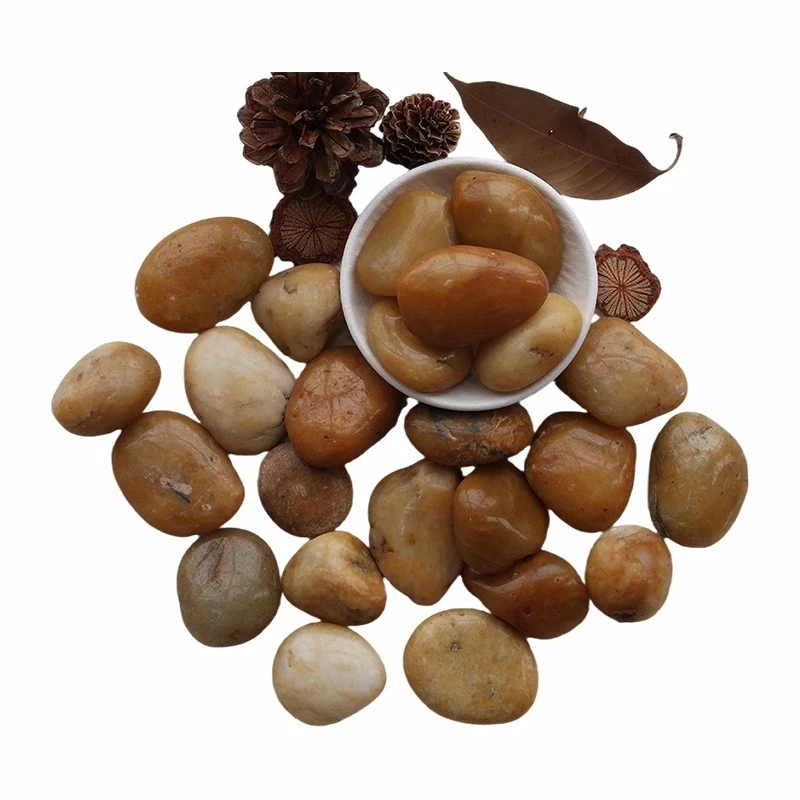
Our company also offers Luxury Polished Yellow Stones and Glossy Multicolor Pebbles.
Luxury Polished Yellow Stones
Yellow is a color that is more likely to attract insects compared to black. Bees and butterflies are known to be attracted to yellow flowers because it is a common color in nature for nectar - producing plants. However, similar to black pebbles, these polished yellow stones do not emit any scents, so the visual attraction may not be enough to draw insects in large numbers.
Glossy Multicolor Pebbles
The multicolor nature of these pebbles might catch the attention of some insects that are attracted to bright and varied colors. But again, without the presence of the right scents or resources, the insects are likely to pass by these pebbles.
Practical Implications for Consumers
For consumers who are considering using high - polished black pebbles in their landscaping or decorative projects, the fact that they are unlikely to attract insects is a significant advantage. It means less maintenance in terms of dealing with insect infestations.
In aquariums, the lack of insect attraction is also beneficial. Insects in an aquarium can disrupt the delicate balance of the ecosystem and may pose a threat to the fish and other aquatic organisms.
Conclusion
Based on the scientific understanding of insect attraction mechanisms and the properties of high - polished black pebbles, it is reasonable to conclude that these pebbles do not significantly attract insects. Their lack of visual appeal, absence of odor, and the relatively weak thermal attraction make them an unattractive option for most insects.
If you are interested in purchasing high - quality High - Polished Black Pebbles, Luxury Polished Yellow Stones, or Glossy Multicolor Pebbles, please feel free to contact us for more information and to start a procurement discussion. We are committed to providing you with the best products and services.
References
- Journal of Insect Behavior. (Year). “Ant Behavior on Different Surfaces.”
- Research Project on Beetle Thermal Preferences. (Year). “Thermal Preferences of Beetles in Relation to Environmental Factors.”