


Hey there! As a crushed gravel supplier, I often get asked a bunch of questions about our products. One question that pops up quite a bit is, "Is crushed gravel porous?" Well, let's dive right into it and find out.
First off, let's understand what porosity means. Porosity is basically the measure of how much empty space there is in a material. In simpler terms, it's about how much air or water can fit inside the material. When it comes to crushed gravel, the answer to whether it's porous isn't a straightforward yes or no.
Crushed gravel is made by breaking down larger rocks into smaller pieces. These pieces come in different shapes and sizes. Some of the spaces between the gravel particles can act as pores. When you look at a pile of crushed gravel, you can see all these little gaps between the stones. These gaps allow air and water to pass through, which is a sign of porosity.
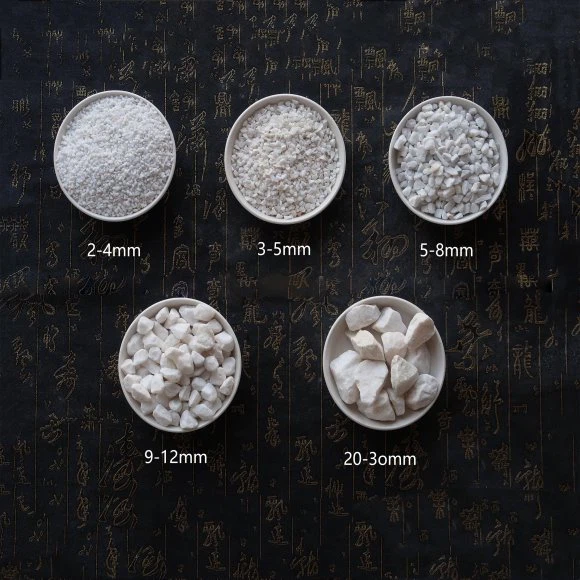

The porosity of crushed gravel can vary depending on a few factors. One of the main factors is the size of the gravel particles. If the gravel is made up of larger particles, there will generally be more space between them, leading to higher porosity. On the other hand, if the particles are smaller, they can pack together more tightly, reducing the amount of empty space and thus the porosity.
Another factor is the shape of the gravel. Gravel that has more irregular shapes will have more spaces between the particles compared to gravel with more rounded shapes. This is because irregularly shaped gravel doesn't fit together as neatly, leaving more room for air and water to move through.
Let's talk about why the porosity of crushed gravel matters. For one, it's great for drainage. If you're using crushed gravel in a driveway or a garden path, the porosity allows water to seep through, preventing puddles from forming. This is especially important in areas with heavy rainfall. The water can quickly drain away, reducing the risk of flooding and damage to the surface.
In addition to drainage, the porosity of crushed gravel also affects its use in construction. In concrete, for example, crushed gravel is often used as an aggregate. The porosity of the gravel can impact the strength and durability of the concrete. If the gravel is too porous, it can absorb too much water, which might weaken the concrete over time. On the other hand, a certain level of porosity can be beneficial as it allows for some flexibility and can help prevent cracking.
Now, let's take a look at some of the different types of crushed gravel we offer. We have Sand Gravel Supplier, which is a popular choice for many construction projects. This type of gravel has a good balance of porosity, making it suitable for both drainage and concrete applications.
Another option is Black Pea Gravel. This gravel has a unique appearance and is often used for decorative purposes. Despite its small size, it still has some porosity, allowing water to drain through. It's great for creating a stylish and functional garden or patio area.
We also offer Manufactured Quartz Sand. While it's not exactly crushed gravel, it's often used in combination with it. The manufactured quartz sand has a high porosity, which can enhance the overall drainage properties of the mixture.
If you're in the market for crushed gravel, it's important to consider your specific needs. Think about whether you need it for drainage, construction, or decoration. Depending on your requirements, you can choose the right type of crushed gravel with the appropriate porosity.
We're here to help you make the best choice for your project. Our team of experts can answer any questions you have and provide you with the right advice. Whether you're a contractor working on a large construction project or a homeowner looking to spruce up your garden, we've got you covered.
If you're interested in purchasing crushed gravel, don't hesitate to reach out. We can provide you with a quote and discuss your options. We're committed to providing high-quality products and excellent customer service. So, if you have any questions or want to start a project, just let us know.
In conclusion, crushed gravel can be porous, and its porosity can have a significant impact on its performance in various applications. By understanding the factors that affect porosity and choosing the right type of crushed gravel, you can ensure that your project is a success.
References
- "Engineering Properties of Gravel" - Journal of Geotechnical and Geoenvironmental Engineering
- "Porosity and Permeability of Aggregates" - Construction Materials Research Institute